
EOSedge®
Imaging that grows with your patients.
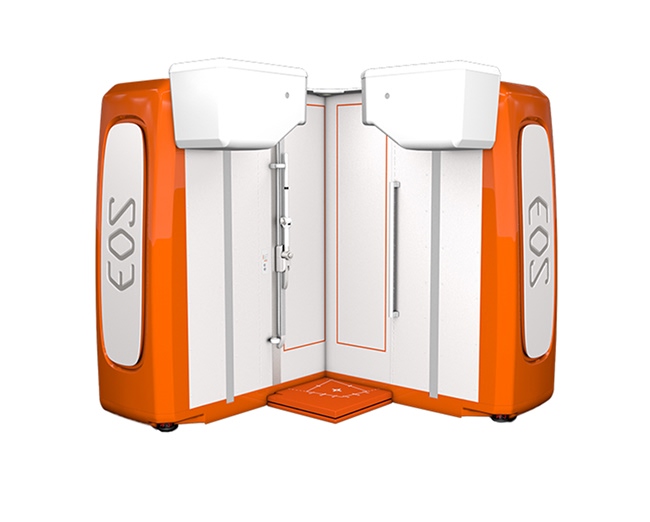
EOSedge® gives you the clarity you need with the safety families expect through standardized, weight-bearing images and low-dose radiation.1 When every degree matters, every pixel counts.
EOS Insight™
Make Every Image Work Harder for You.
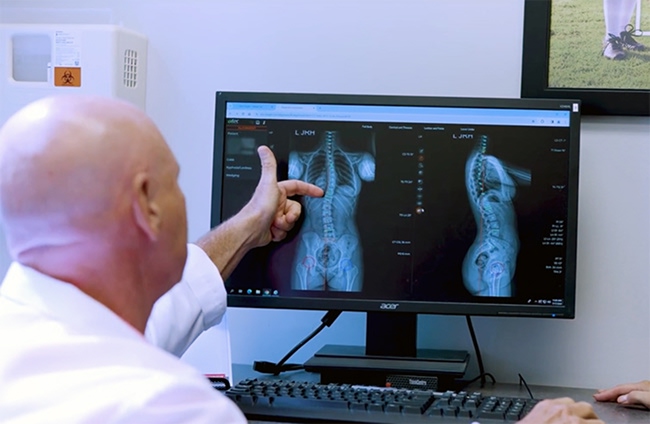
EOS Insight™ provides accurate metrics in minutes, not hours. By combining AI driven Cobb angle and leg length discrepancy detection with detailed 3D spine models, you’ll gain access to a level-by-level axial rotation breakdown and metrics that matter.
Invictus®
Trusted technology, thoughtfully engineered.
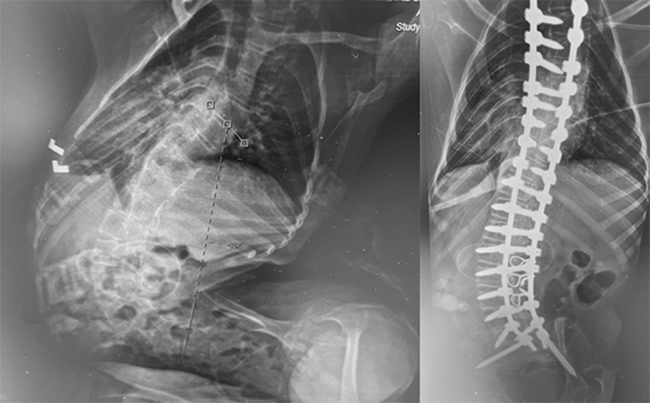
With low-profile tulips, Helical Flange, and gripping thread, Invictus® Small Stature maximizes the strength of the Invictus platform while minimizing implant prominence for patients concerned about comfort and appearance. A comprehensive hook portfolio supports a wide range of constructs, including growing rod strategies, giving you the flexibility your surgical plans demand.
Pediatric Positioner
Positioned for precision.
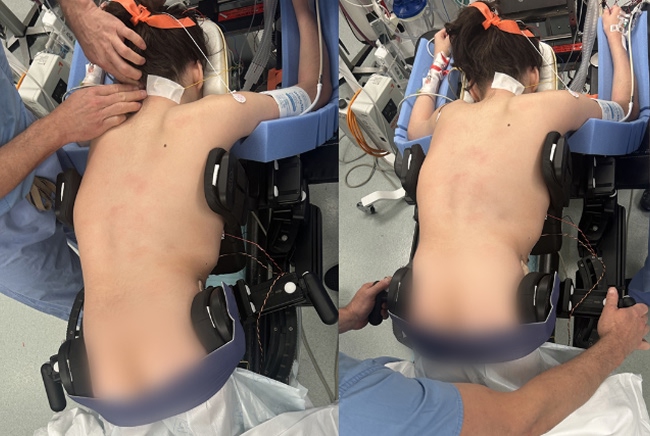
Our pediatric positioner offers the modularity needed to accommodate a wide range of patient sizes and pathologies while remaining fully radiolucent. The ergonomic, surgeon-driven controls make pre- and intra-operative coronal and sagittal adjustments intuitive and efficient, putting precision in your hands when it matters most.
SafeOp™
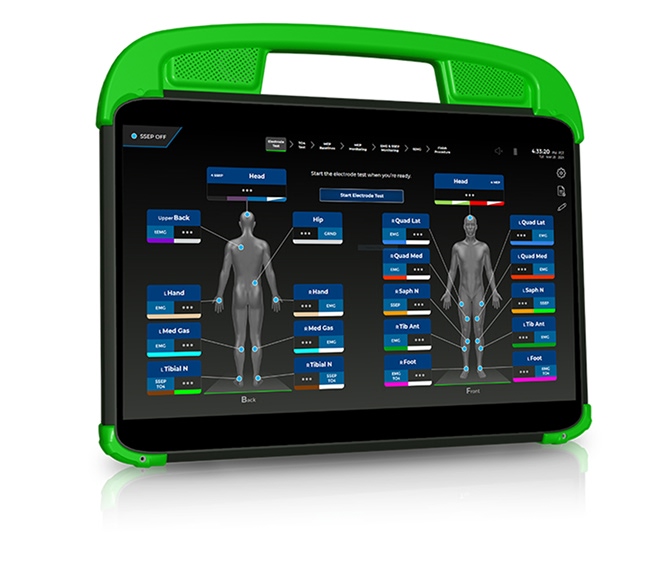
Advanced Neuromonitoring Made Simple.
Multimodality neuromonitoring with SafeOp™ provides objective, real-time and actionable data to monitor the health of nerves at risk during pediatric procedures. Real-time, continuous spinal cord monitoring through SSEPs and minimally disruptive MEP technology2 enable cord monitoring in spine surgery, from occiput to ilium.
1 Guerra R. Feuerstein P, Barakat N., et al. Radiation Exposure Comparison Across Longitudinal Scoliosis Follow-up Digital Radiography Versus EOSedge. Paris, France: EOS imaging; June 2022. MKT-10599-A.
2 Cohen, B., & Lima, E. (2019). O-10 minimizing body movements from motor evoked potential testing using LQP-TCEMEP methodology. Clinical Neurophysiology 2019; 130(7).
EXCERPT FROM LIT-85798A